

Agnes Harness
English | 简体中文

Built for trust. Made for the real world.
Bring AI into real workflows. Turn each deployment into capabilities you can reuse.
Quickstart · Architecture · Try the examples · Build a plugin · Documentation · MHS and devices
Developer preview (pre-alpha) · Source build · Apache-2.0

LLM is the brain. Jev is the cerebellum. Harness is the memory. MHS is the body.
One foundation for enterprise FDE delivery and physical-world MHS integration. See the architecture
Taking AI into a real deployment is rarely about the model alone. It is about the customer's systems, the people who approve the work, and the details that differ at every site. Agnes Harness (AGH) connects models, tools, task state, and business interfaces: put the differences into plugins, let the harness run and record the work, and carry what you validated into the next deployment.
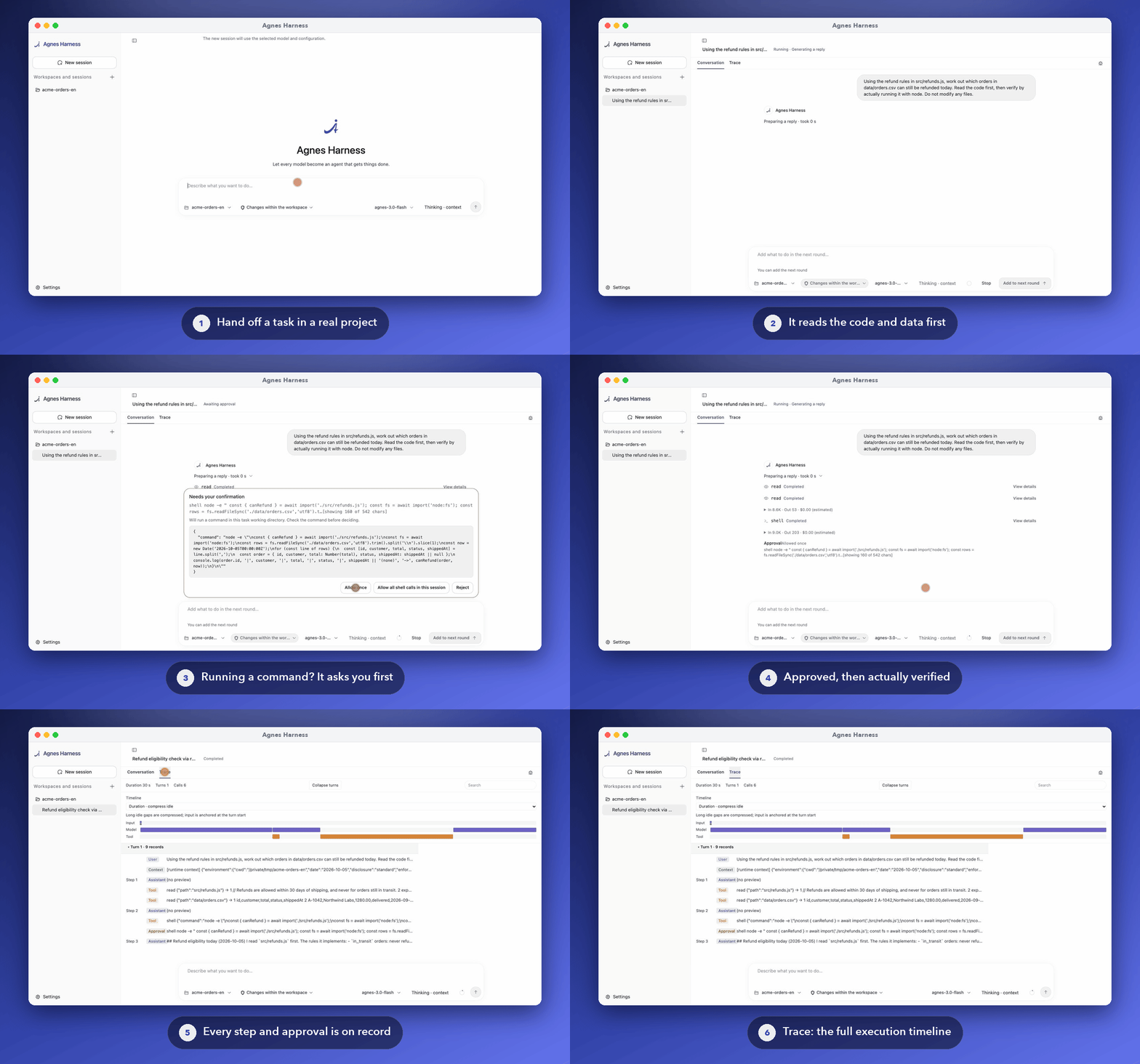
Read the code, ask before running a command, verify, answer, and record every step.
Contents
What AGH is, and what it is not
AGH is built for Forward Deployed Engineering (FDE): working in users' environments to turn systems integration, a usable interface, and ongoing iteration into delivered software. Start through CLI and Web, integrate business systems with plugins, capture task methods in Skills, and combine them into your own agent application. Explore FDE and application scenarios →
What it is not, so you can choose the right trial:
- Not a hosted service. AGH is a developer preview that you build from source and run in your own environment.
- Not a sandbox for arbitrary plugin code. Ordinary backend plugins run as trusted in-process code; approvals and the command sandbox apply to the supported execution paths. See security and trust.
- Not a certified device driver. MHS is AGH's own device protocol, independent of MCP. Passing its conformance suite does not certify a device as safe, and device controllers keep real-time control and physical safety.
- Not finished. APIs, configuration, and plugin interfaces are evolving and may change.
Architecture: brain, cerebellum, memory and body
The brain, cerebellum, memory and body describe AGH's vision: combine reasoning, structured decisions, persistent task context, and physical capabilities. The diagram shows where each role sits in one runtime.
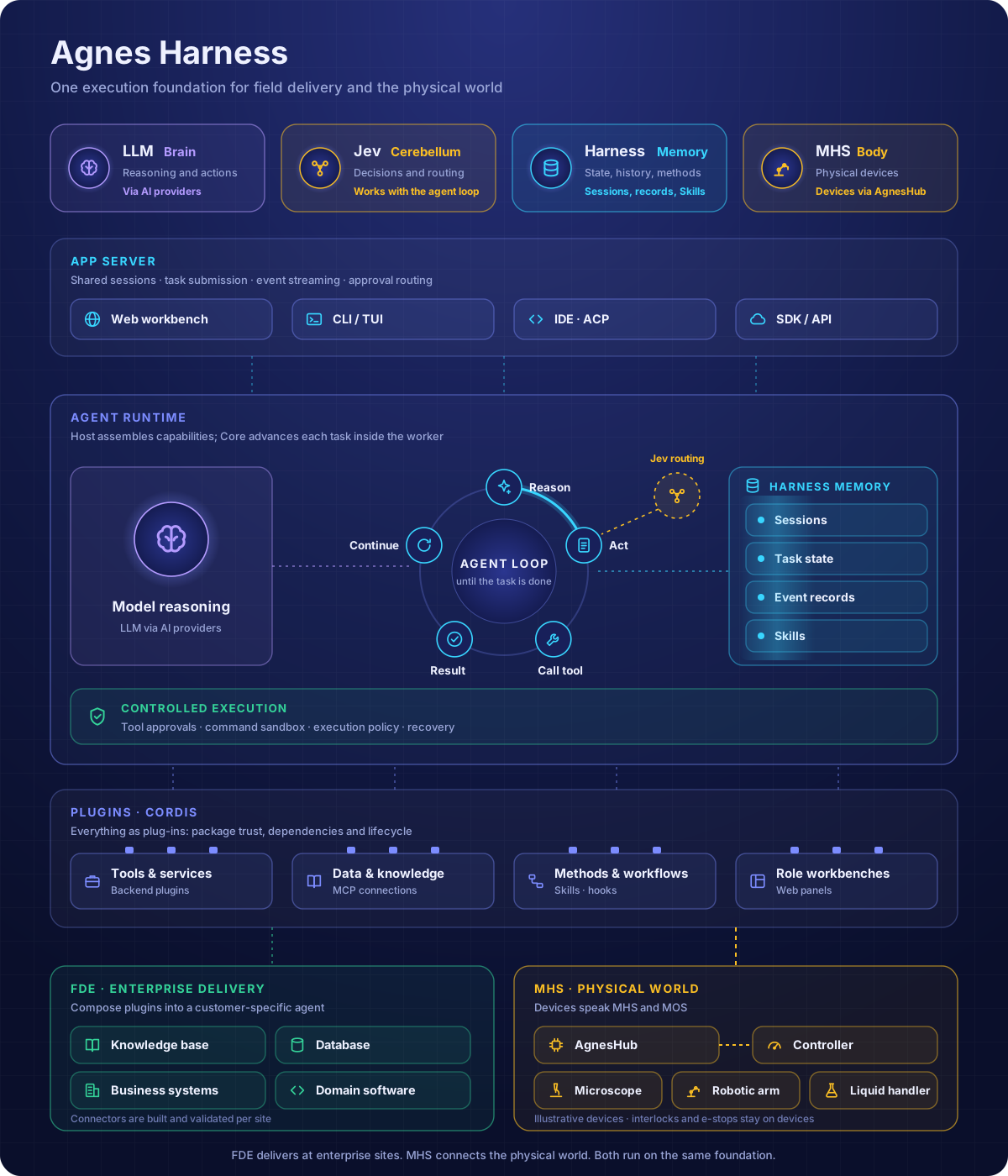
| Role | What it means in AGH | Current scope |
|---|---|---|
| LLM / brain | Understand requests, reason about the task, and propose actions | Model integration through AI providers |
| Jev / cerebellum | Structured decisions such as routing and scoring to help coordinate execution | Integration in progress; main currently uses the built-in Core loop |
| Harness / memory | Retain session history, task state, execution records, and reusable methods in Skills | Existing task context and recovery mechanisms; Harness also runs and governs execution |
| MHS / body | Connect device capabilities so tasks can read physical state and request actions | MHS and MOS 1.0 specifications, device libraries, the mhs-check conformance suite, and AgnesHub as an optional plugin with device tools for the brain |
FDE is a delivery approach; MHS brings devices into the same work. Both build on the same foundation, and an FDE deployment can include devices.
| Shared module | Supports FDE today | What MHS integration reuses |
|---|---|---|
| App Server | Shared sessions, task submission, event delivery, and approval routing for CLI, Web, and SDK clients | Task entry points, human confirmation, and status presentation |
| Agent Loop | Model/tool execution, task state, event records, interruption handling, and recovery | High-level device task orchestration and result records |
| Sandbox / execution constraints | Tool authorization and applicable command, file, network, and process constraints | Software execution boundaries; device controllers retain motion control, interlocks, and emergency stops |
| Plugins | Backend tools/services, Web panels, Skills, hooks, and MCP connections, organized with Cordis and package governance | AgnesHub runs as an optional plugin: device tools for the brain and a Devices panel in the workbench |
Business connectors and workbenches are built through these extension paths for each deployment. Devices connect through MHS; the repository includes sample devices and a development hub for trying them without hardware.
Follow the actual request path and source ownership in the architecture guide, or explore the source map.
What AGH does for a deployment team
1. Every customer's systems are different
The agent needs your order lookup, your knowledge base, your internal API. Writing that into the agent itself means forking it for every customer.
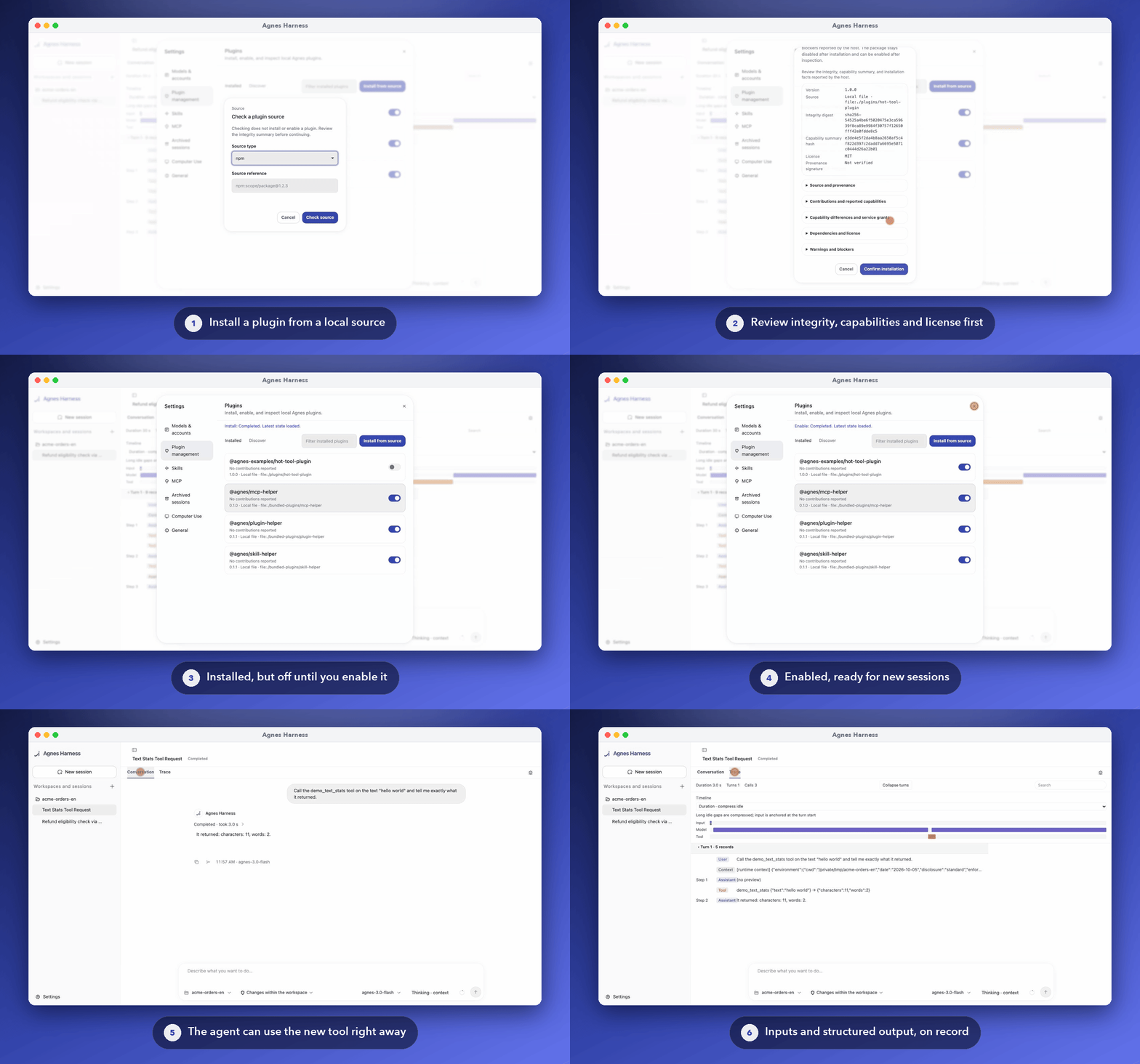
In AGH, a business capability is a plugin: register a tool through a backend plugin or connect an existing service through MCP. Installing one shows its version, source, integrity digest, capability hash, and license before anything runs; enabling it binds and verifies those hashes. The agent can then call it, and every call keeps its inputs and structured output.
2. Work starts on the Web and continues in the terminal
The analyst starts a task in the browser; the engineer picks it up from a terminal. Copying context between tools loses history and decisions.
CLI, Web, and SDK share the same backend sessions. Resume a Web session in the terminal with /resume <id> and the history, tool records, and results are already there; whatever you add in the terminal shows up in the Web thread. See sessions and recovery.

3. "What did the AI change, and who approved it?"
In a customer environment, a result is not enough: you need to show how it was produced.
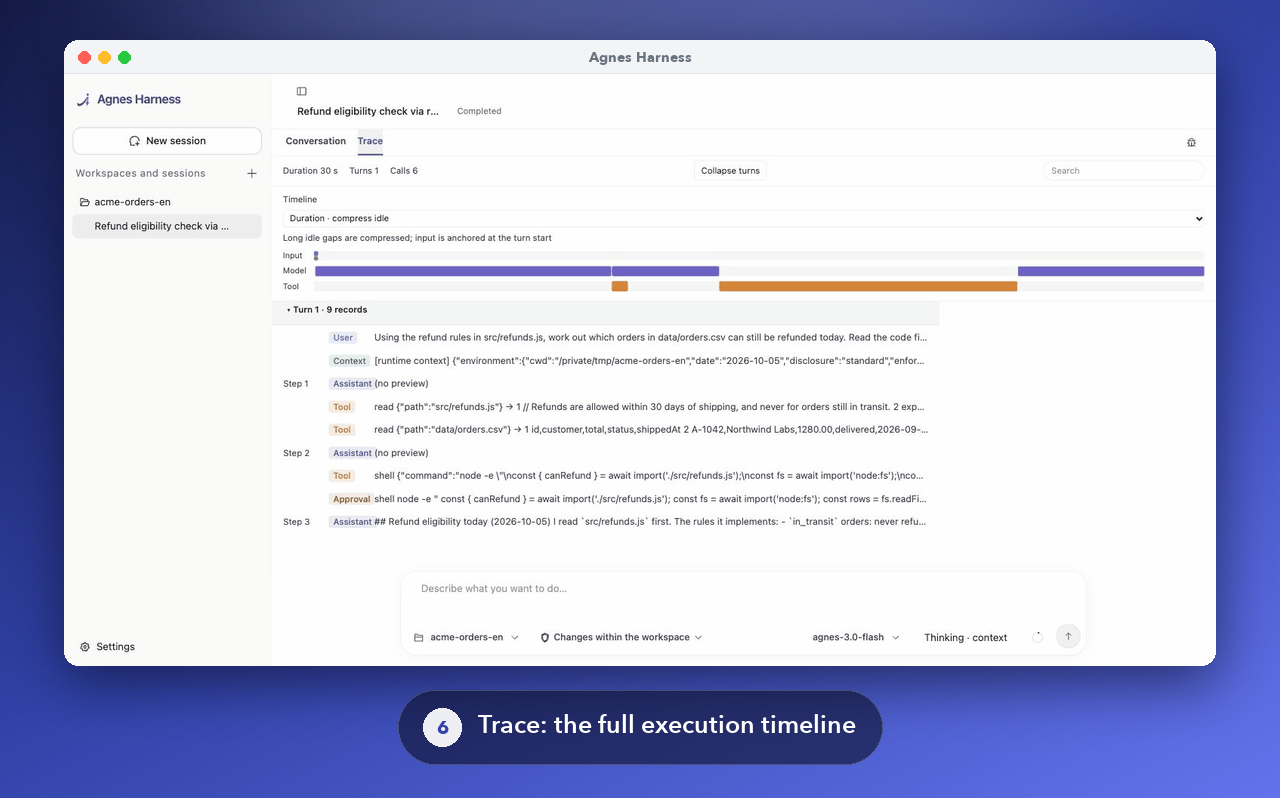
Running a command waits for your approval by default: allow once, allow for the session, or deny. The Trace view keeps a timeline of model calls, tools, and approvals, step by step. Package trust, tool approvals, execution constraints, and session records give the integration explicit points of control. See security and trust.
4. Each role needs its own screen
A support lead and a warehouse operator do not want the same interface. Add frontend panels to the Web workbench and connect them to backend services through controlled calls with full-stack plugins.
5. The next deployment should start from the last one
Capture task methods in Skills and package reusable business logic as plugins with a governed lifecycle: install, enable, update, roll back, and remove.
6. The site also has devices
From inspection to instrument coordination, field work connects device state, human judgment, and business workflows. Agnes MHS (Model Hardware Standard) is AGH's own open device protocol, independent of MCP and of vendor-specific SDKs: a device connects to AgnesHub over WebSocket, registers its state, tools, and data sources, and takes calls. Its companion MOS (Model Observation Standard) streams what the device observes, such as camera images, maps, and places. State reads, action requests, and results join the same task flow. Try devices without hardware →
Demo videos and reproduction
MHS Mars rescue: coordinating devices
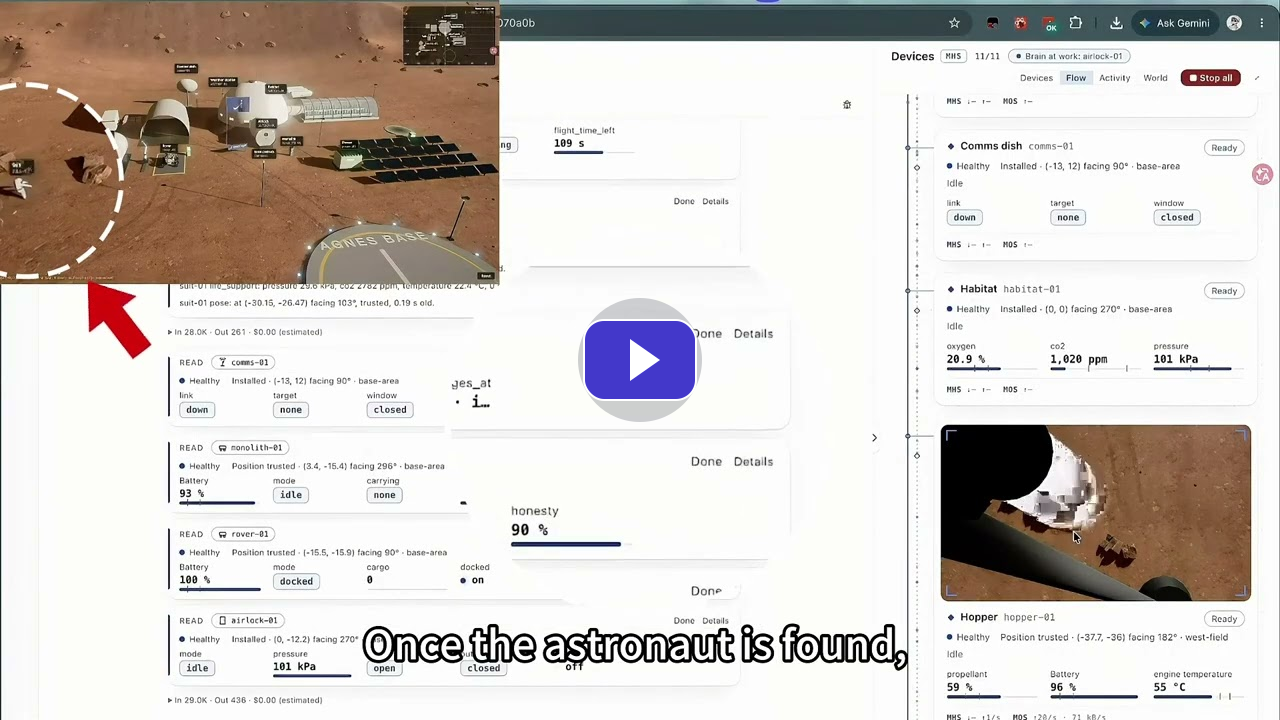
Have the agent send the hopper to find an astronaut, then coordinate the robot and airlock to bring them back. AGH runs the task, AgnesHub calls devices through MHS, and MOS returns camera images, poses, and other observations.
What you need: AGH, a model that supports images and tool calls, the @agnes/mhs plugin, and Mars World in a browser. The repository provides eleven virtual devices; no physical hardware is required. Follow the Mars base guide to start them and give the agent a task.
Public benchmark
On the public Agents' Last Exam (ALE) leaderboard, which evaluates complete agent systems (model, harness, and tools) on professional tasks, Agnes Harness with Agnes 2.5 Pro Beta reaches a 21.7% overall pass rate and a 42.7 overall score.
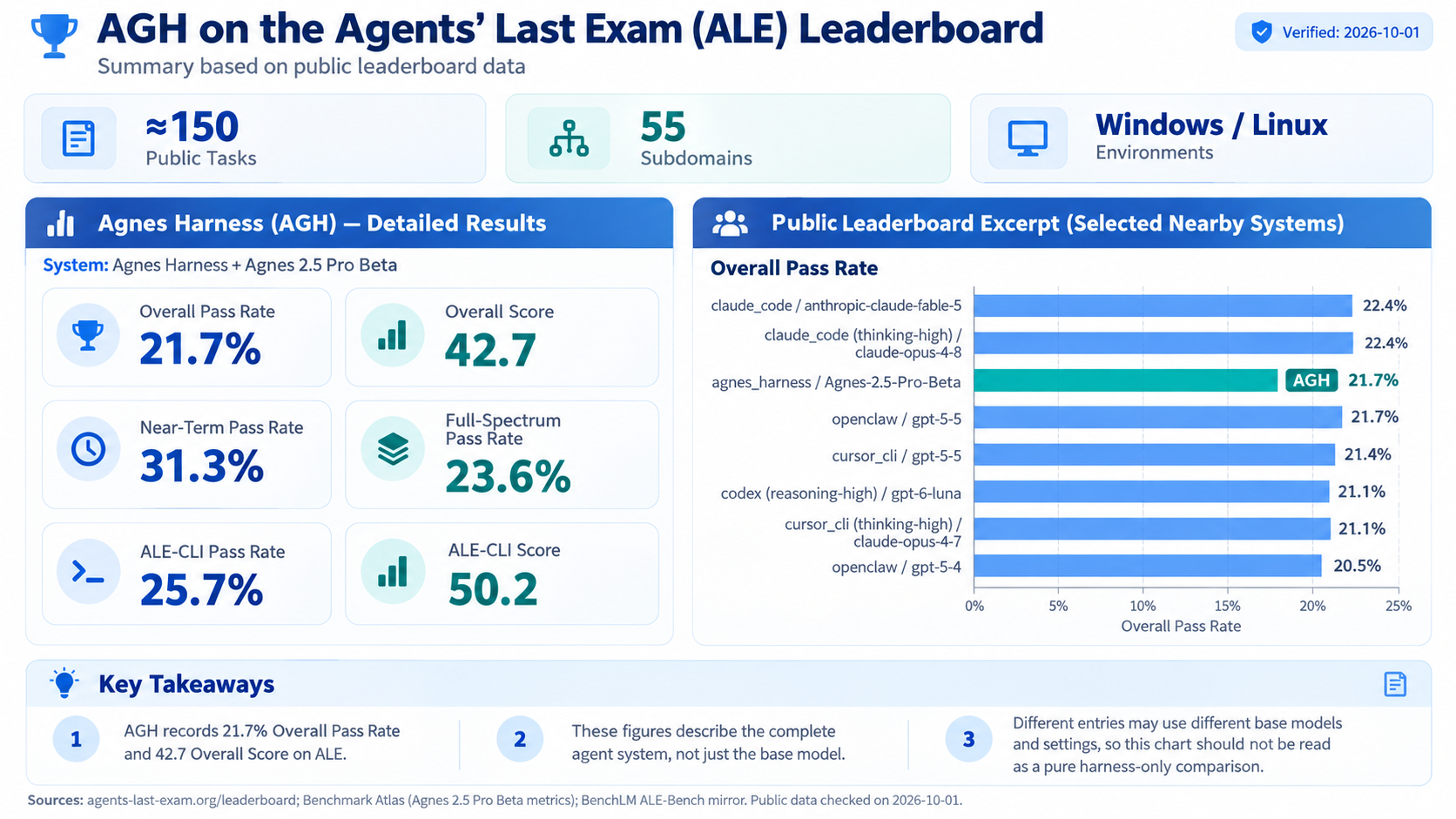
Results depend on model versions, settings, and tool configurations. See the leaderboard for current figures.
Who it is for
- FDE and solution engineers delivering agents into customer systems and workflows
- Plugin developers packaging business tools, services, and interfaces for reuse
- Teams that need oversight: approvals before commands, records of every step, and explicit package trust
- Field and lab teams bringing devices into tasks through MHS
Not a fit yet if you need a hosted service, signed installers, or a production commitment today: AGH is a developer preview.
Start from an example
The repository includes runnable examples for backend capabilities, custom interfaces, and full-stack integration. Each tutorial includes source code, steps, and expected results.
| Example | What you will see | What you can build from it |
|---|---|---|
| A tool | Invoke demo_text_stats and receive character and word counts |
Connect order lookup, data retrieval, or another business function |
| A panel | Load your own sidebar panel and update its version | Show task information and business state for a particular role |
| A full-stack plugin | Read a backend result from a panel, then inspect updates and rollback | Package a business service together with its interface |
Choose an example, then add your business logic. Open the demo guide →
Run from source
AGH is a developer preview (pre-alpha), available through a source build. You need Node.js 24.10+, pnpm 10.34.5, and the native build tools for your platform. See getting the source and installation.
Before running AGH, read security and trust and choose the working directory and permissions. From the source repository root:
pnpm install --frozen-lockfile
pnpm --filter @agnes/cli build:local
node packages/cli/dist/local/agnes.mjs serve
Open the printed loopback URL, configure a model, create a task, and confirm its working directory. Try your first request:
Read this project and explain the problem it solves and how its main directories are organized. Do not modify files.
Leave the Web server running and open a second terminal in the same source directory. The CLI uses the same backend and configuration; if you set AGH_HOME or AGNES_PROFILE, use the same values in this terminal:
node packages/cli/dist/local/agnes.mjs -p "Briefly explain what this project does"Follow the quickstart to inspect results, find the session, and continue working. Without a model account, you can try the local simulated-model demo to explore plugins and task execution.
The full documentation is available in English and 简体中文. Each page links to the same topic in the other language.
Current status
AGH is a developer preview.
| Area | State |
|---|---|
| Web workbench, CLI and terminal UI, SDK on shared sessions | Available in the developer preview |
| Agent loop, tool approvals, trajectory records, recovery | Available |
| Plugins: backend tools and services, Web panels, Skills, hooks, MCP | Available, with documented constraints |
| Command sandbox and execution constraints | Platform-dependent |
| Platforms | Recorded local checks on macOS with Node 24; Linux and Windows need separate acceptance |
| Jev structured decisions | Integration in progress |
| MHS device integration through AgnesHub | Available as an optional plugin |
Use supported scope and known limitations to choose your trial environment, and the verification guide for reproducible checks and their scope.
FAQ
Can I use AGH in production? Not yet. AGH is a developer preview without a public package release, installer, or upgrade commitment. Validate deployment, audit, and isolation requirements in your own environment.
Are plugins sandboxed? Ordinary backend plugins run as trusted in-process code, so install only packages you trust. Approvals and the command sandbox apply to the supported execution paths; they do not isolate arbitrary plugin code.
Which models can I use?
Models connect through AI providers, and each provider's catalog determines the available capabilities. The demos on this page were recorded with Agnes AI agnes-3.0-flash; quality and tool selection vary by model.
Can MHS control devices today? Yes, through AgnesHub: the brain calls the tools a device declares, and AgnesHub checks every call against that declaration. The MHS guide starts with sample devices. Canceling an AGH task does not establish that a device stopped safely; device controllers keep interlocks and emergency stops.
Do you accept pull requests? Code and documentation pull requests are currently limited to invited internal developers. Issues for bug reports and use-case suggestions are welcome; see the feedback and development policy.
Follow AGH and bring your use case
If you are exploring AI deployment in the field, Star the project, use Watch to follow updates, and share AGH with developers building agent applications and business integrations.
- Try it and give feedback: Run an example and share your experience. Use Issues for ordinary bug reports and use-case suggestions.
- Build and reuse: Develop plugins, connect tools, and create a workbench in your own project under the applicable licenses.
Report vulnerabilities privately under the security policy.
License
Project-authored code is licensed under the Apache License 2.0. Third-party components, adapted files, and some examples retain their own license terms; see NOTICE and licensing details.